AI That Thinks Like Commerce
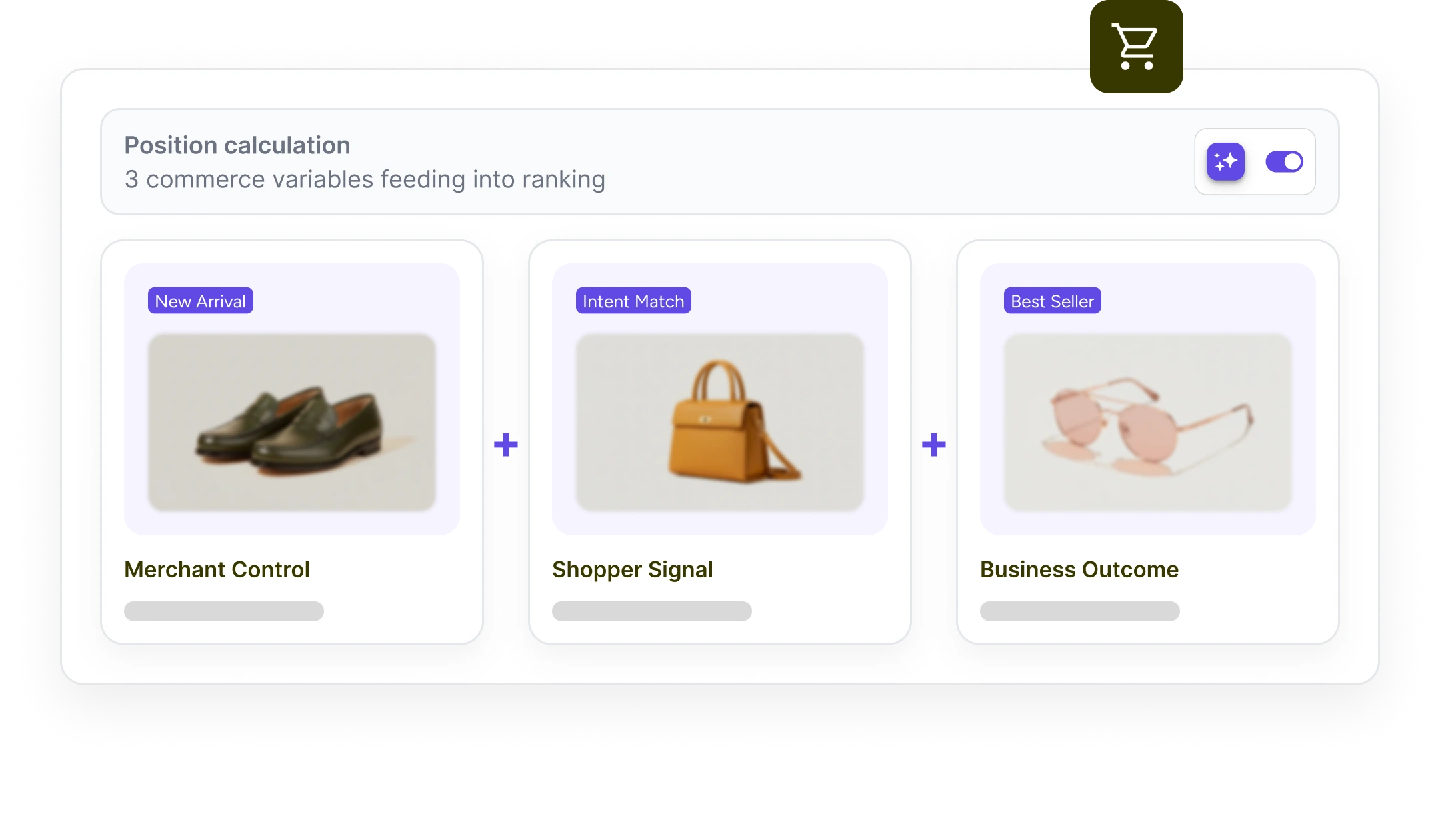









Every Merchandising Decision Comes Down to Three Questions
How Do You Inspire a Shopper to Notice a Product They May Want to Buy Now?
How Do You Keep the Brand Expression Consistent as You Scale?
How Do You Satisfy All The Commerce Constraints While Maintaining Brand Expression and Business Goals?
One Shopper, One Product, One Moment
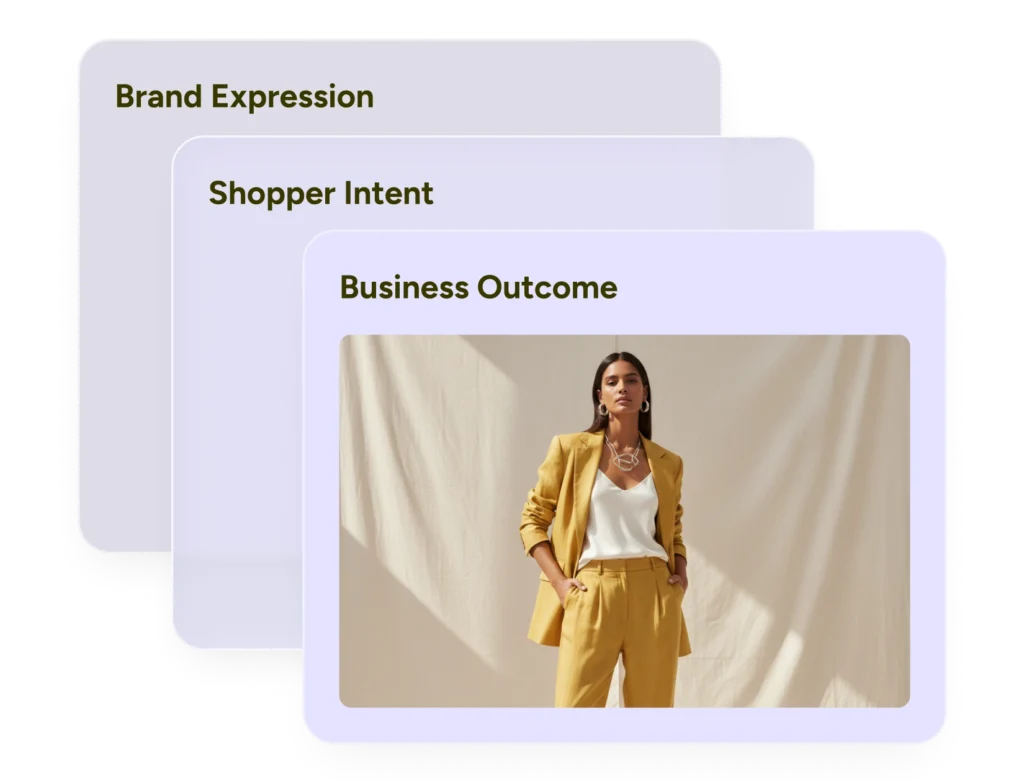
Getting All Three Right Takes AI Built for Commerce, Not a Generalist LLM
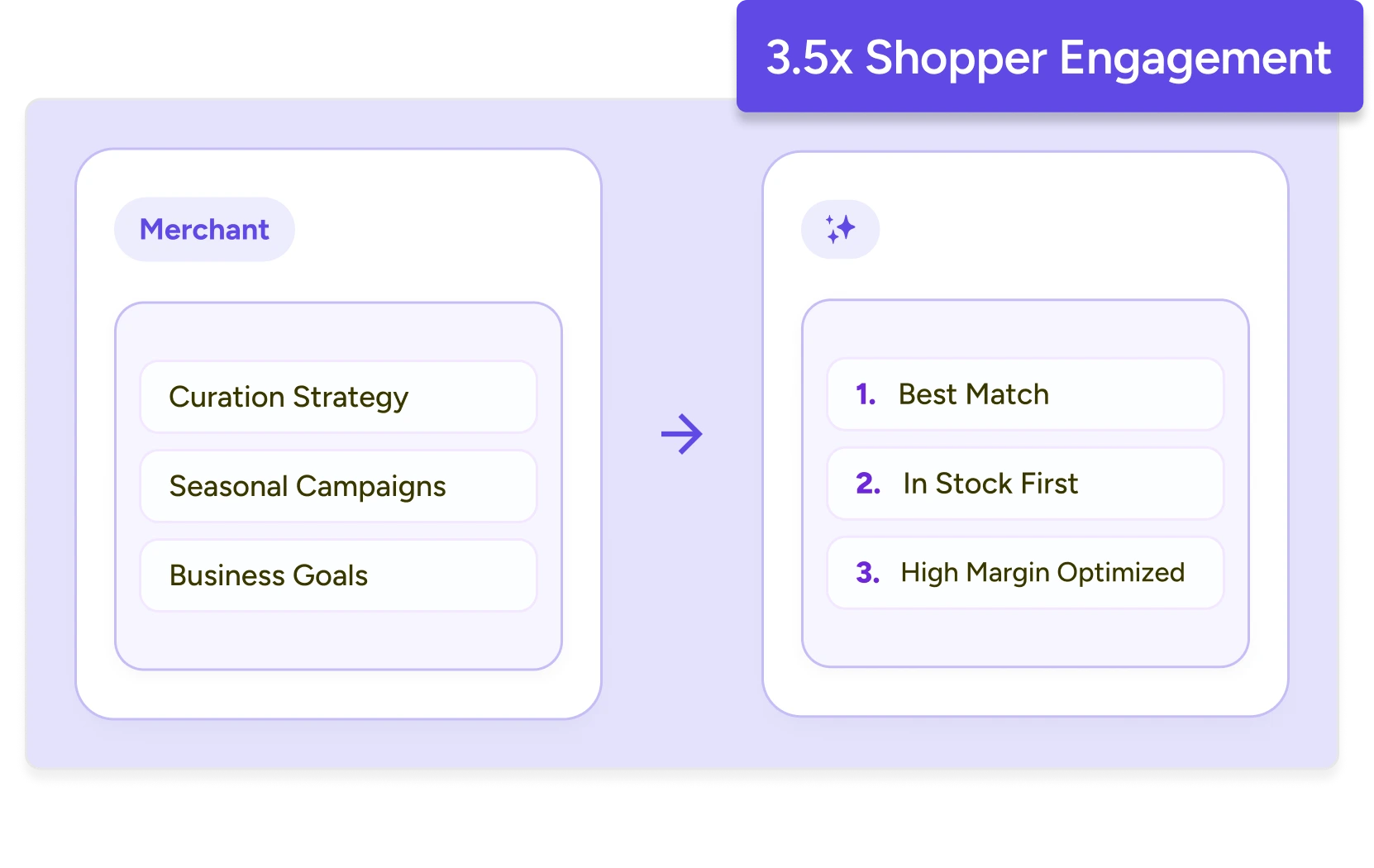
Merchants Define the Strategy. Commerce-Native AI Optimizes That Strategy.
Understand. Optimize. Control. Prove.
Understand
Optimize
Control
Prove
Not a Demo. An A/B Test.
A True Head-to-Head Test
Clear Rules, Clear Results
Brand Expression Plus Machine Intelligence
Collections and Category Pages
Recommendations and Complete the Look
Search and Conversational Search
AI Shopping Agents
What Our Customers Say

"With Fast Simon's merchandising and personalization, we are able to show customers designs that are tailored specifically to them."
"With Fast Simon's merchandising and personalization, we are able to show customers designs that are tailored specifically to them."
FAQs
What is Commerce-Native AI?
Fast Simon's AI model, purpose-built for e-commerce. It combines shopper intent with catalog structure, newness, inventory, availability, price, velocity, promotions, visual storytelling, merchandising policy, and business goals, then personalizes product rankings, recommendations, and search results in real time, based on each shopper's intent and the merchant's goals.
Will it replace our merchandisers or override our rules?
No. Your team sets the strategy, rules, and guardrails, and decides how much AI ranking to blend with them. The model optimizes your strategy without stepping outside it.
How is this different from Fast Simon AI Personalization?
AI Personalization adapts the experience to shopper behavior. Commerce-Native Personalization adds catalog, merchandising, inventory, promotion, and business context.
Does it work for first-time, anonymous visitors?
Yes. It personalizes from the first interaction, with no login or purchase history, and sharpens as intent develops.
How does Fast Simon measure the impact of Commerce-Native AI?
With a live A/B test on your store. Shoppers are randomly split into two groups. One group sees your collections as they work today. The other sees collections ranked by the Commerce-Native AI model, within the guardrails you set. Before the test starts, we agree on the goal, usually revenue per visitor, and a minimum run of 14 days. When it ends, you get the full results and whether the lift is statistically significant (95% confidence or higher), directional (90% to 95%), or inconclusive.
How Do You Inspire a Shopper to Notice a Product They Want to Buy Now?