
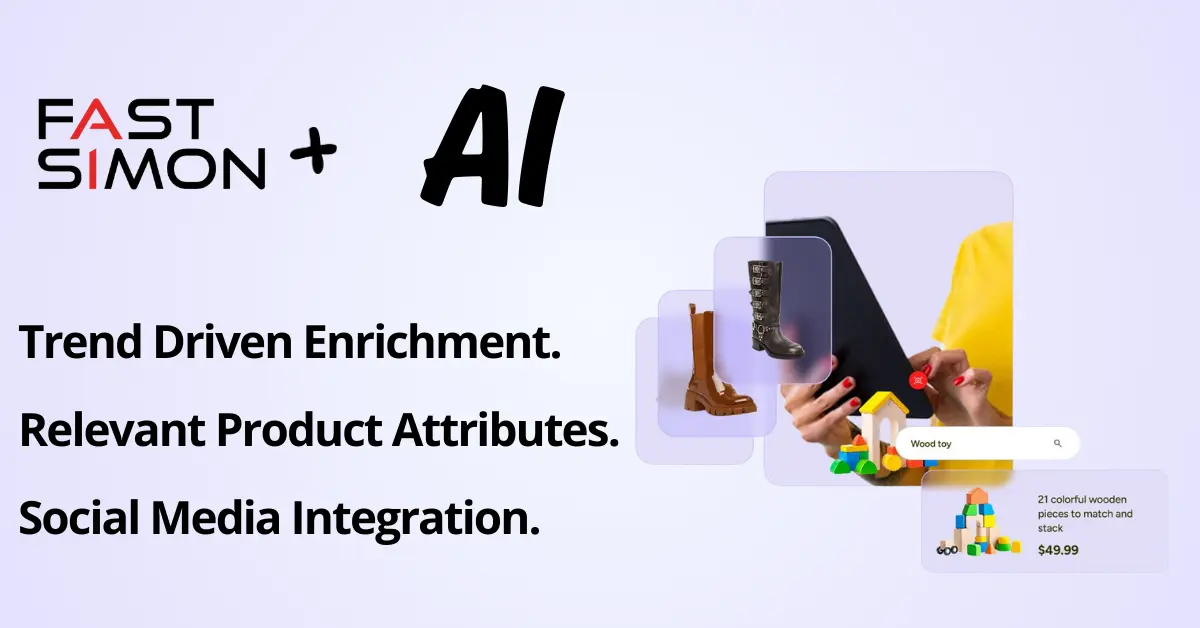
Modern eCommerce sales take place in new ways, and brands must be able to meet these standards and customers’ needs. With the prominence of social media, fast moving trends and specific style wording, having an AI site search that can show customers what they are looking for is key. Our post Search Challenges in Modern Ecommerce demonstrates the problems.
Using LLM to be able to identify the meanings behind emojis, influencers within posts and intent behind longer queries is the way forward. It demonstrates innovation and valuing your customers’ experience. The key is turning each shoppers intent into the right product, at the right time.
Query Understanding Using Large Language Models
Large language models (LLMs) understand and generate text in a more human-like way than ever before. This helps to power AI systems in a way that meets customer needs without them having to adjust the way they search. This can be useful in terms of advanced search, allowing customers to search more naturally and find the products they are actually searching for.
This kind of AI can help fill in missing attributes from text and images that might be important for people when searching for current trends. For example, an image may demonstrate a style such as: “coffee run chic”, however this might not be in any of the keywords or tags.
Fast Simon’s LLM means that even if “coffee run chic” isn’t in the original keyword or attributes, the AI can understand what is meant by this and the desired style can still be produced. This results in more sales, more products being sourced and better results for businesses.
In summary: AI extracts hidden attributes from the text and images to enhance recall, ensuring users find final products even when the merchants omit these details.
The result: higher sales for merchants, better user experience for shoppers.
Trend Driven Product Enrichment
We know that merchants need to be able to demonstrate that they are at the cutting edge of fashion, which is why our trend-driven product enrichment via social media is a key way of ensuring that brands meet their consumer needs.
Shoppers may look at posts on Instagram, and be inspired by what they see there. These could be trending individual products or outfits, Fast Simon’s search engine can help locate the relevant products based on enriched social tags.
For example, “farm style” may be demonstrated in an Instagram post, and the search on the eCommerce page would result in the same style of shoes. Another example could be using specific influencers or models to find products. For example, if Winnie Harlow is seen wearing a certain dress on a brand’s social media page, searching “Winnie Harlow” in the corresponding eCommerce brand’s search would result in the outfit she was wearing. What’s more, if the influencer is wearing products from brands on their own personal pages, you can still find the corresponding products in the search.
This saves shoppers from having to wonder what the item is called, or which keywords to use. Instead, it means that shoppers save time and effort and know they will be able to locate the products they are looking for.
Examples of terms could be extended to:
- Retro ‘70s
- Real Housewives
- Standing on business
And plenty more, corresponding to whichever terms are trending at the time.
In summary: AI makes the link between enriched attributes on social media posts and inferred terms and produces the desired results in eCommerce site search.
The result: a more enriched omnichannel experience and improved customer satisfaction.
Attributing Emojis To Relevant Products
Emojis have grown in popularity, purpose and understanding over the past decade. These small icons can infer a whole range of emotions, products and meanings. Incorporating them into site search is the next logical step.
Attribute extraction and mapping means that the following emojis could produce the following results:
- A pink flower: floral patterns
- A woman in a tiara: bridal attire
- A leopard: animal print
For younger generations, being able to search in these shorter and more succinct terms saves time and allows for creativity within search. Being able to offer this creates higher customer satisfaction and gives merchants the potential to display extra-mile innovation within their AI search offering.
In summary: Fast Simon detects shoppers searches with emojis on eCommerce stores.
The result: an innovative and forward thinking solution to make your store stand out from the crowd.
Conclusion
When trends move fast and competition is saturated, merchants need to find a way to keep customers happy and stand out from the competition. These AI developments mean that merchants will see more sales and more satisfied customers and shoppers will feel valued and looked after by their favorite fashion brands.